

There’s a particular kind of hush along Vienna’s Ringstrasse in the early evening—when the façades glow softly and the city seems to hold its breath between opera and aperitivo. It’s here, between the Vienna State Opera and the Musikverein, that The Amauris Vienna reveals itself: not with grandeur, but with a quiet, almost cinematic precision.
Housed in a meticulously restored 19th-century palais, the hotel walks a fine line between preservation and reinvention. The original architecture—dating back to 1861—remains intact in spirit, its historic stucco and proportions carefully honored. Yet step inside, and the atmosphere shifts. This is not nostalgia, but reinterpretation.

Marble is the defining language here—and not in moderation. More than 160 tons have been woven into the building, from Carrara Bianco and Calacatta to the deep veining of Nero Marquina and Rosso Levanto. It’s a material story told with confidence: every guest room door, a sculptural slab weighing over 300 pounds; the lobby staircase, a striking composition where each step reveals a different marble variety, turning ascent into a tactile, almost gallery-like experience.

The interiors balance this opulence with restraint. Clean-lined furnishings soften the weight of stone, while curated pieces from famous design brands introduce a contemporary rhythm. The result is layered rather than ornate—an interplay of texture, light, and proportion that feels distinctly modern, yet deeply rooted in place.

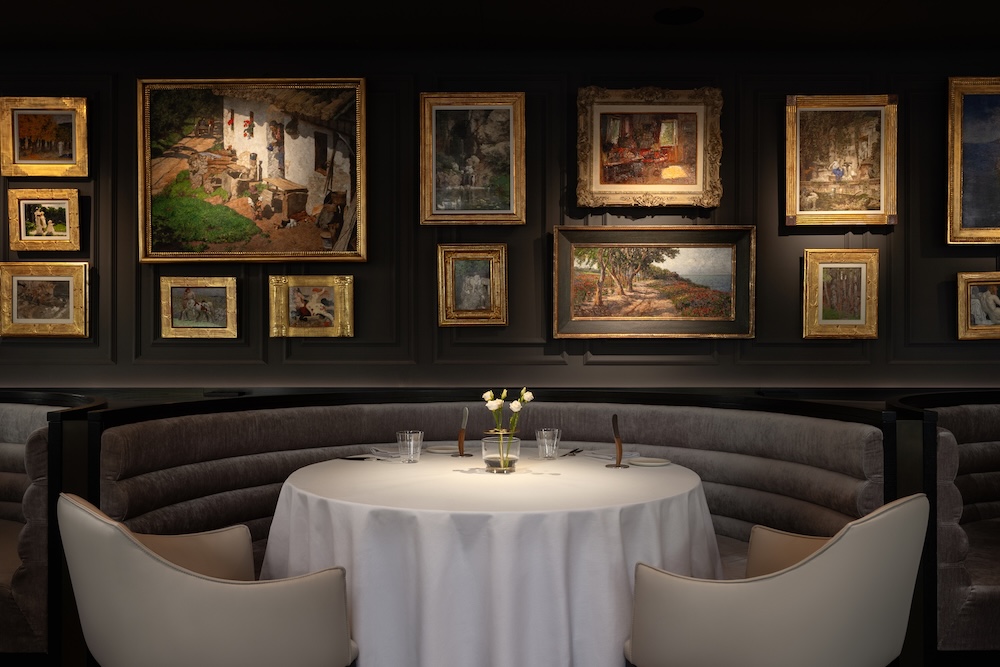
Art plays a quieter, but no less important role. Paintings from the Ringstrasse era punctuate the spaces, adding depth and narrative without overwhelming the design. It’s this tension—between history and clarity, richness and control—that defines the hotel’s visual identity.

Then there is Glasswing. Within this architectural composition, the restaurant feels like a natural extension of the design ethos: refined, precise, and quietly expressive. Awarded its first Michelin star in 2026, the Glasswing Restaurant by Alexandru Simon elevates the experience beyond aesthetics.

Here, Viennese culinary heritage is reimagined through a contemporary lens—delicate, nuanced, and layered with international influences. Each dish mirrors the space itself: thoughtful, composed, and deeply attuned to detail.
Dining unfolds as part of the overall narrative. Marble surfaces catch the glow of carefully placed light, textures echo across plate and interior, and the line between design and gastronomy begins to blur. It’s not just a restaurant within a hotel—it’s an extension of its philosophy.
A place where every detail holds its ground, yet nothing feels overstated.
Interior Design
Architekturbüro Hoppe+Partner
Design
Flos, Vitra, Minotti, Potocco


